


The Anecdote Effect.
education exchange
Anecdotes in learning materials have been found to help increase pupil motivation in a topic. However, they have also been shown to distract from the learning. The anecdote becomes a seductive detail that distracts from the learning. This may happen through reducing the time spent focusing on the key knowledge, overwhelming the working memory with extra information, or disrupting the schema building in their brain. Overall, these ‘seductive details’ have been found to have had a net negative effect on learning. Wesenberg et al (2026) investigated whether it was possible to harness the motivational benefits while mitigating the tax on knowledge.
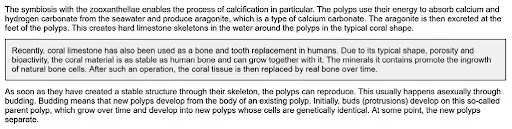
Wesenberg et al (2026) found that placing seductive details in materials does reduce performance in texts but increases motivation. However, if these anecdotes were placed in coloured boxes marked as independent of the topic, it was possible to offset the detrimental effects but maintain the uplift in interest. Just marking the box as being independent of the topic was enough; including extra information that the anecdote was irrelevant to the learning goal did not add any additional benefit (e.g., telling students "this is not relevant for the exam" provided no extra learning protection).
NOTES
Example from the study of a seductive detail marked out as being independent from the text to be learned (translation from German)
It is worth noting that, like most educational research, the sample for this experiment was mainly university students with a mean age of 24.95.
References
Wesenberg, L., Krieglstein, F., Jansen, S., Schneider, S., & Rey, G. D.(2026). Mitigating the seductive details effect by topic and irrelevance signals. British Journal ofEducational Psycholog y, 96, 382–400. https://doi.org/10.1111/bjep.70022
AI acknowledgement
AI was not used to write this article. AI was used to fact-check the written article against the original research paper. As AI can be wrong, the AI analysis was then double-checked by hand. For example, AI claimed the mean age was 22.09, when it is actually 24.95