
Myth 4 - Male and Female Brains
education exchange
In 2025, 3 papers published research from over 4,500 teachers across 12 counties on the most commonly held myths in education. In this series of blogs, we will be looking at the 10 most common myths, how they came about, and the realities surrounding them.
Can you spot a myth? Try this fun quiz based on some of the questions teachers were asked in the research studies
Spot the myth - Try here
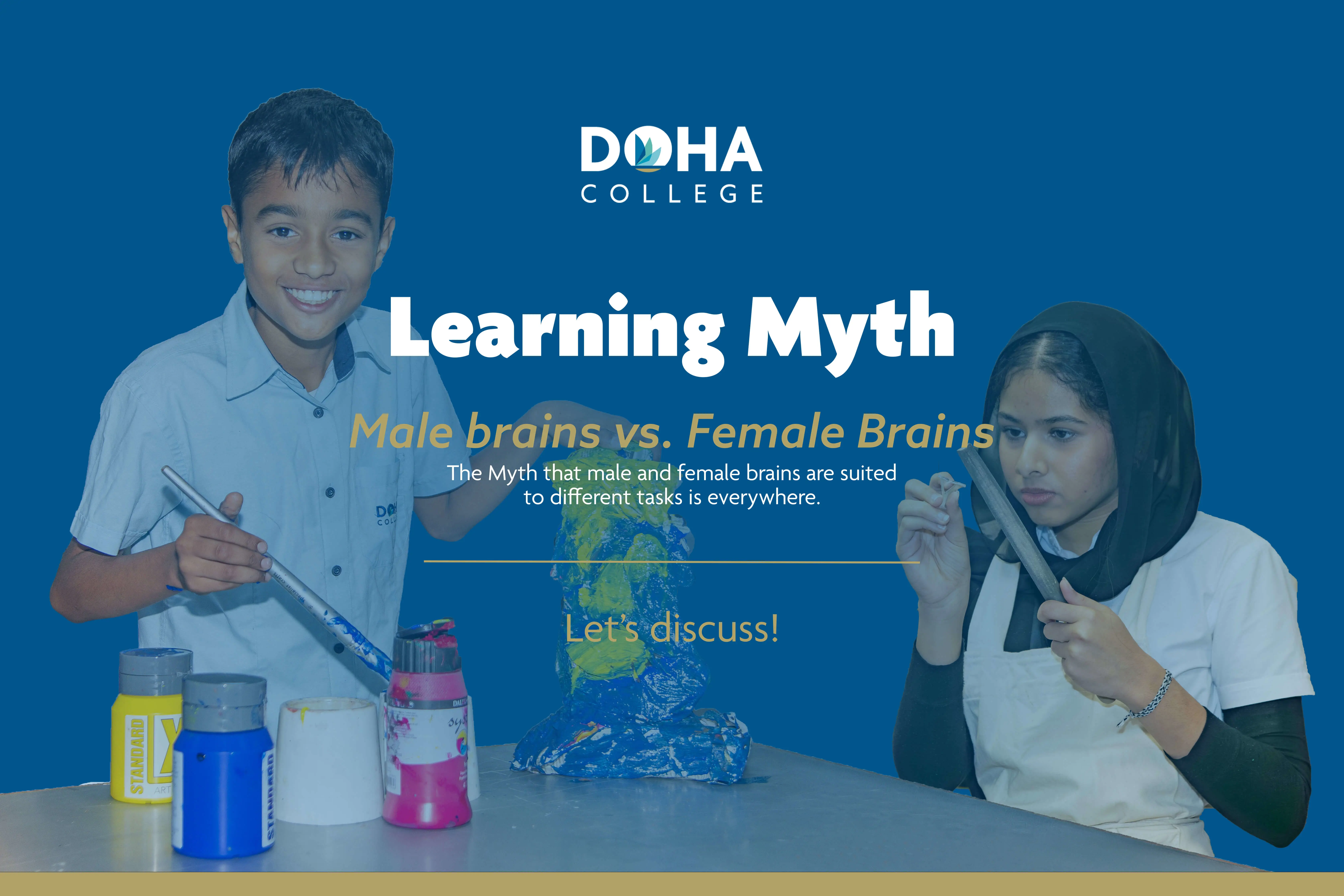
Myth 4 - Male and Female Brains
Have you ever heard the idea that boys are better at maths? Or, that girls are better at languages? Who packs the car in your family? Who reads the map? Who is more empathetic and caring? The Myth that male and female brains are suited to different tasks is everywhere. Even if you Google “stereotypical male and female traits of the brain”, Gemini’s initial response would suggest this myth is true…unless you are someone who ‘expands’ search results to read the whole thing.
The Reality
The reality is that with MRI scans, it isn’t possible to tell whether a brain belongs to a male or female patient (Joel et al, 2015). In fact, if you look at all the male brains or all the female brains, there is more variation within genders than the average differences between them. Most skills we identify as being typically ‘male’ or ‘female’ are plastic and can be trained. These gender stereotypes are actually a product of our environment, cultural expectations, opportunities and gender equality (Spencer, Steele & Quinn, 1999; PISA data). Are men generally assumed to be better at packing the car because they grew up playing with lego and construction blocks? Do we assume girls are better at languages because they are given dolls and spend more time role-playing?
Classroom Impact
Stereotypes have the risk of limiting our pupils. It is essential that all pupils have access to the same opportunities. As teachers it is vital not to change our expectations of pupils based on their gender, should we allow those stereotypes to be reinforced in our classrooms and communities.This is why the work of DEI is more than just being ‘woke’ or a ‘tick box exercise’, it is vital that our lesson, language we use, books in our library etc. not only don’t reinforce stereotypes but also seek to break them down.
Sources
- Fernández-Miras, J.G., Aguilar-Parra, J.M., Trigueros, R. and López-Liria, R. (2023) 'Beyond neuromyths: Examining in-service teachers’ misconceptions about teaching and learning', Frontiers in Psychology, 14, p. 1144002. doi: 10.3389/fpsyg.2023.1144002.
- Adiguzel, O.C., Potvin, P., Sarrasin, J.B., Vanhoolandt, C., Corfdir, A., Japashov, N., Mansurova, A., Tsai, C.C., Wu, C.L., Elmas, R., Atik-Kara, D., Kucukkayhan, S., Zaid, A.K., Kouchou, I., Voulgari, A., Sy, O., Sakho, I., Ng, S.B., Charland, P. and Létourneau, A. (2025) 'Belief in neuromyths among primary school teachers: a cross-national study of 11 countries', Trends in Neuroscience and Education, 40, p. 100264. doi: 10.1016/j.tine.2025.100264.
- Tunga, Y., Çelik, B. and Cagiltay, K. (2025) 'Educational myths among teachers: prevalence and refutational intervention for belief change', Humanities and Social Sciences Communications, 12, 1619. doi: 10.1057/s41599-025-05470-y.
- Hyde, J.S. (2005) 'The gender similarities hypothesis', American Psychologist, 60(6), pp. 581–592. doi: 10.1037/0003-066X.60.6.581.
- Joel, D., Berman, Z., Tavor, I., Wexler, N., Gaber, O., Stein, Y., Shefi, N., Pool, J., Urchs, S., Margulies, D.S., Liem, F., Hänggi, J., Jäncke, L. and Assaf, Y. (2015) 'Sex beyond the genitalia: The human brain mosaic', Proceedings of the National Academy of Sciences, 112(50), pp. 15468–15473. doi: 10.1073/pnas.1509654112
- Spencer, S.J., Steele, C.M. and Quinn, D.M. (1999) 'Stereotype threat and women's math performance', Journal of Experimental Psychology, 35(1), pp. 4–28. doi: 10.1006/jesp.1998.1373.