
Myth 1 - The Left vs the Right Brain
education exchange
In 2025, 3 papers published research from over 4,500 teachers across 12 counties on the most commonly held myths in education. In this series of blogs, we will be looking at the 10 most common myths, how they came about, and the realities surrounding them.
Can you spot a myth? Try this fun quiz based on some of the questions teachers were asked in the research studies
Spot the myth - Try here
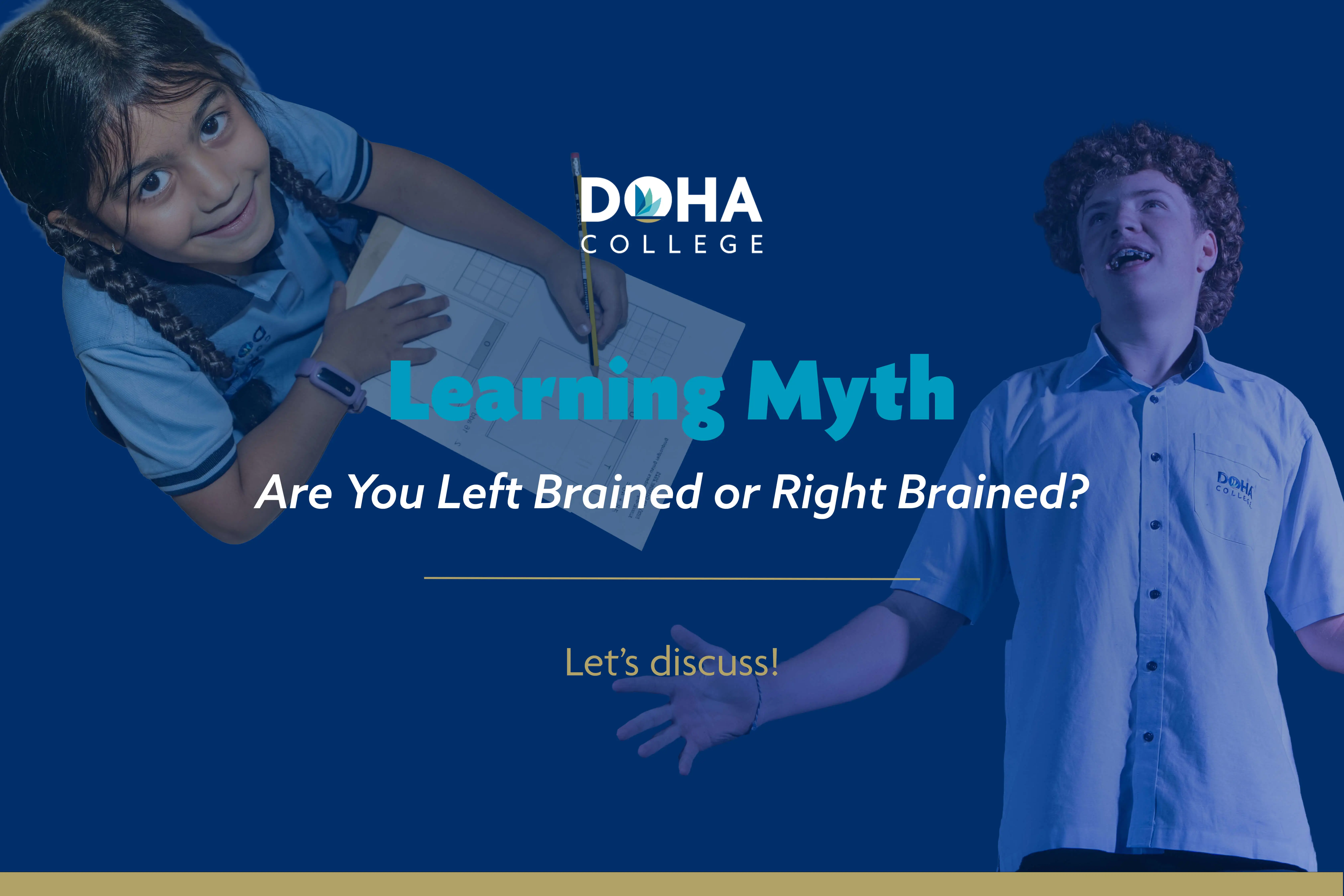
Myth 1 - The Left vs the Right Brain
A favourite of the internet, from brain training apps to a plethora of social media clickbait (anyone seen renderings of twirling dancers or spinning horses?). Paul Dennison even developed Brain Gym to help our children connect the left and right sides of their brains.
Many of these ideas will help us diagnose whether we have a logical ‘left-side’ dominant brain or a creative ‘right-side’ dominant brain. Perhaps they will give us movements to connect the two halves. When my daughter was just starting to walk at 1 year old, I certainly remember squeezing myself through tight IKEA tunnels to get her to keep crawling in order to improve those ‘connections’ between the two halves of the brain (on advice from a medical doctor!).
The Reality
Certain areas of the brain are more involved in particular activities. For example, on the left side of the brain, Broca’s area and Wernicke’s area are more active during language production and language comprehension, respectively. While the right side of the brain sees higher activity during face recognition.
The reality is that there is no credible evidence that our brains are dominant in a way that determines personality, intelligence or a learning style. The idea that we are left or right-brain dominant is a myth.
Classroom Impact
There is no need to ‘develop’ certain parts of our brains or the connections between them. Doing brain gym exercises with pupils, does not help them perform better in exams or boost their memory.
Importantly, this myth is rife on social media. What we want to avoid is pupils limiting themselves by thinking they are either left- or right-brained, dominant. They risk pigeon holing themselves into a camp where they feel defeated by The Arts before they even try because they think they are ‘left brain dominant’. Or that someone thinking they are ‘right-brain dominant’ lacks the self-efficacy needed to succeed in the sciences. Listen out for pupil conversations and educate them on this myth.
Sources
- Fernández-Miras, J.G., Aguilar-Parra, J.M., Trigueros, R. and López-Liria, R. (2023) 'Beyond neuromyths: Examining in-service teachers’ misconceptions about teaching and learning', Frontiers in Psychology, 14, p. 1144002. doi: 10.3389/fpsyg.2023.1144002.
- Adiguzel, O.C., Potvin, P., Sarrasin, J.B., Vanhoolandt, C., Corfdir, A., Japashov, N., Mansurova, A., Tsai, C.C., Wu, C.L., Elmas, R., Atik-Kara, D., Kucukkayhan, S., Zaid, A.K., Kouchou, I., Voulgari, A., Sy, O., Sakho, I., Ng, S.B., Charland, P. and Létourneau, A. (2025) 'Belief in neuromyths among primary school teachers: a cross-national study of 11 countries', Trends in Neuroscience and Education, 40, p. 100264. doi: 10.1016/j.tine.2025.100264.
- Tunga, Y., Çelik, B. and Cagiltay, K. (2025) 'Educational myths among teachers: prevalence and refutational intervention for belief change', Humanities and Social Sciences Communications, 12, 1619. doi: 10.1057/s41599-025-05470-y.